Arcade Zone Game Text Effect: A Practical Guide for Digital and Print Designers
In the crowded landscape of digital marketing and graphic design, typography often serves as the primary hook for audience engagement. Among the myriad of stylistic choices available, retro-inspired aesthetics have maintained a surprising resilience. The Arcade Zone Game Text Effect represents a specific niche within this broader trend, offering designers a ready-made solution for creating bold, nostalgic, and high-impact headlines. This editable template for Adobe Illustrator is designed to streamline the workflow for professionals who need to produce consistent, high-quality visual assets without starting from scratch.
Understanding the utility of such a resource requires looking beyond the surface-level appeal of pixelated fonts or neon glows. It involves evaluating how pre-built text effects integrate into modern design pipelines, particularly when balancing the needs of web-based promotions and physical print materials. This article explores the distinct features of the Arcade Zone Game Text Effect, compares it to alternative design approaches, and helps you determine if it fits your current project requirements.
Defining the Arcade Zone Aesthetic and Its Utility
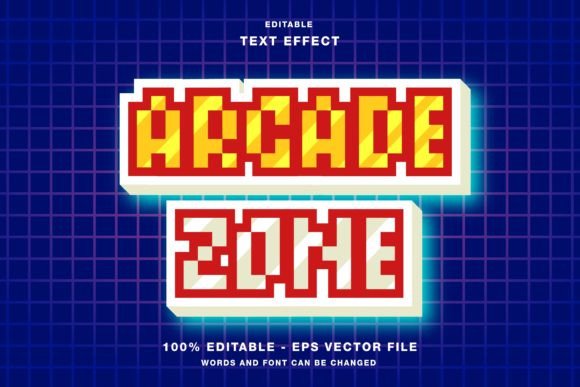
The term "Arcade Zone" evokes a specific era of gaming culture characterized by vibrant colors, blocky structures, and a sense of energetic movement. When applied to text effects, this style typically involves thick, dimensional lettering with sharp edges, often accompanied by glowing outlines or shadow effects that mimic CRT monitor displays. The Arcade Zone Game Text Effect template captures these elements in a vector-based format, allowing for infinite scalability without loss of quality.
What makes this particular template distinct is its dual-purpose nature. While many text effects are optimized solely for screen use (RGB), this resource is crafted with versatility in mind. The inclusion of EPS and JPG files alongside the native Illustrator format means that designers can adapt the asset for various mediums. Whether you are designing a social media banner for Instagram or a large-format poster for a local event, the underlying structure remains robust. The editable nature of the template ensures that you are not locked into a static image; instead, you can modify the text, adjust colors, and tweak dimensions to suit specific brand guidelines.
Comparing Pre-Made Templates vs. Custom Design
When deciding whether to use a tool like the Arcade Zone Game Text Effect, designers often weigh the benefits of speed against the desire for unique customization. Creating a complex 3D or neon text effect from scratch in Adobe Illustrator can be time-consuming. It requires a deep understanding of blending modes, gradient meshes, and appearance panels. For a seasoned professional, this might take hours of fine-tuning to achieve a polished look.
In contrast, using a pre-made template significantly reduces production time. You can input your headline, adjust the color mode to RGB for digital platforms, and have a campaign-ready asset in minutes. However, this convenience comes with tradeoffs. Pre-made templates may lack the bespoke nuance of a custom-designed piece. If your brand requires a highly specific typographic personality that deviates from the standard arcade aesthetic, a template might feel generic. Therefore, the decision often hinges on the project’s timeline and budget. For rapid-turnaround social media posts or internal publications, the efficiency of the Arcade Zone template is invaluable. For flagship brand campaigns where uniqueness is paramount, it may serve better as a starting point for further customization rather than a final product.
Evaluating Format Compatibility: RGB vs. CMYK Considerations
A critical technical aspect of the Arcade Zone Game Text Effect is its default color mode: RGB. This is ideal for digital applications, including web designs, Twitter headers, Facebook promotions, and Instagram stories. Screens emit light, and RGB colors appear vibrant and luminous, which aligns perfectly with the neon-heavy arcade aesthetic. However, designers must exercise caution when adapting these files for print.
If you intend to use this text effect for flyers, posters, magazines, or event papers, you will need to convert the color profile from RGB to CMYK. This conversion can sometimes result in a shift in color vibrancy, particularly with bright neons and electric blues. While the template includes EPS files, which are vector-based and scalable for print, the color fidelity may require manual adjustment. Understanding this limitation is crucial for maintaining brand consistency across channels. If your primary focus is print media, you may need to spend additional time recalibrating the colors to ensure they match your expectations when physically printed. Conversely, if your work is predominantly digital, the RGB-native format offers a seamless, plug-and-play experience.
Best-Fit Use Cases and Audience Alignment
The versatility of the Arcade Zone Game Text Effect makes it suitable for a wide range of industries, but it resonates most strongly with brands targeting adults aged 20–50 who have an affinity for retro culture or gaming. Here are some practical scenarios where this template excels:
- Social Media Promotions: Platforms like Instagram and Twitter favor bold, eye-catching visuals that stop the scroll. The high-contrast nature of arcade-style text performs well in these environments, especially for announcing sales, events, or new product launches.
- Event Marketing: For music festivals, gaming conventions, or themed parties, the energetic vibe of the text effect aligns naturally with the event’s atmosphere. It can be easily adapted for digital tickets, email headers, or promotional banners.
- Editorial Design: Magazines and online publications covering technology, gaming, or pop culture can use this effect for section headers or feature titles to add visual interest and break up dense text blocks.
However, it may not be the right choice for corporate financial reports, legal documents, or luxury brand campaigns where minimalism and subtlety are preferred. The boldness of the arcade style can clash with serious or understated brand identities.
Customization and Workflow Integration
One of the strongest advantages of this template is its editability. Unlike raster-based effects that become pixelated when resized, the vector foundation allows for precise adjustments. Designers can change the text content, modify the stroke weights, and alter the color palette to match specific campaign themes. The inclusion of both EPS and JPG files in the main folder provides flexibility for team members who may not have access to Adobe Illustrator. For instance, a social media manager can use the JPG for quick posts, while a graphic designer uses the EPS for high-resolution print materials.
To maximize the value of the Arcade Zone Game Text Effect, consider integrating it into a broader design system. Use the font style and color palette as a consistent element across multiple touchpoints. This creates a cohesive visual identity that audiences can recognize instantly. Additionally, experiment with layering the text over different backgrounds. While the effect is striking on dark backgrounds, testing it against lighter or textured surfaces can yield unexpected and engaging results.
Making an Informed Decision
Choosing the right design resource involves balancing aesthetic appeal, technical compatibility, and practical utility. The Arcade Zone Game Text Effect offers a compelling solution for designers seeking to inject energy and nostalgia into their projects. Its strengths lie in its ease of use, scalability, and suitability for digital-first campaigns. However, users must be mindful of color mode limitations when transitioning to print and should assess whether the retro aesthetic aligns with their brand voice.
For those managing tight deadlines or needing consistent visual assets across multiple social platforms, this template provides significant efficiency gains. For projects requiring absolute uniqueness or specialized print color accuracy, it may serve better as a foundational element to be heavily customized. By understanding these nuances, you can leverage the Arcade Zone Game Text Effect effectively, ensuring it enhances rather than hinders your creative objectives.